Georgetown Research Grant for work on second dialect acquisition
I've just been awarded a Georgetown Summer Academic Grant, which will help me continue my work on how expats and other mobile speakers change their speech after living in a new place. Watch this space for more details!
Hello Spring 2016
Here's what I'll be teaching this semester (click course title for syllabus):
LING 215: Sounds of Language (undergraduate) An introduction to phonetics and phonology, the linguistic subfields concerned with describing and explaining how speech sounds are made, used, heard, and mentally organized.
LING 414: Sociophonetics (graduate/undergraduate) Everyone has an accent. Moreover, everyone’s accent varies depending on who they are talking to, what they are talking about, what kind of personal identity they want to convey, and other contextual factors, and listeners accordingly attribute social meaning to the variation that they hear. In this course students will learn how sociophonetic variation in production and perception can be systematically studied to answer questions about language, social meaning, and the link between them. The first part of the course will focus on the acoustic analysis of conversational speech. The second part will turn to the experimental study of speech perception and social meaning, accent change over the lifespan, and the implications of sociophonetic variation for phonological theory. Students will develop skills throughout this course that will enable them to 1) make appropriate methodological choices when planning research projects in sociophonetics, 2) use tools such as ELAN, PRAAT, FAVE, NORM, and R to facilitate data processing, and 3) critically evaluate (socio)phonetic studies of language.
New article in Language and Linguistics Compass
My paper Second Dialect Acquisition: A Sociophonetic Perspective has just been published in Language and Linguistics Compass. It's a critical review of the sociolinguistic work on SDA.
Abstract: Many people change aspects of their accent after moving to a new region. What kinds of changes are made, and why does it matter? Studies of second dialect acquisition (SDA) indicate that geographically mobile speakers change specific dialect features in ways that reflect the complex interaction of linguistic, social, and developmental factors in language use. This article reviews these findings from a sociophonetic perspective, paying particular attention to their theoretical implications, the methodological issues associated with studying SDA, and avenues for future research.
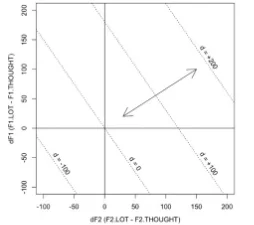
Working paper on second dialect acquisition and style variation
Daniel Ezra Johnson and I have been looking at how speakers who are acquiring second dialects shift between their old and new accents in different contexts. A paper version of our NWAV 43 presentation (Partial mergers and near-distinctions: Stylistic layering in dialect acquisition) can now be found in the U Penn Working Papers in Linguistics here.